
How Long Can You Really Drive On A Spare Tire?
At Christian Brothers Automotive, we've seen too many people turn a flat tire into a dangerous situation because they didn't know one simple fact: your spare tire has an expiration date.
Most drivers assume they're safe once they swap out a flat for their spare. Unfortunately, this isn’t the case. If you drive too long on the wrong type of spare, you're risking a blowout, damage to your car, and unsafe driving conditions for you and your passengers.
Spare tires should never be a permanent replacement, which begs the question: how long can you drive on a spare tire? The type of spare tire in your vehicle makes a difference in how long and how far you can drive before needing to fix your tire or buy a new one.
Understanding Your Spare Tire Type
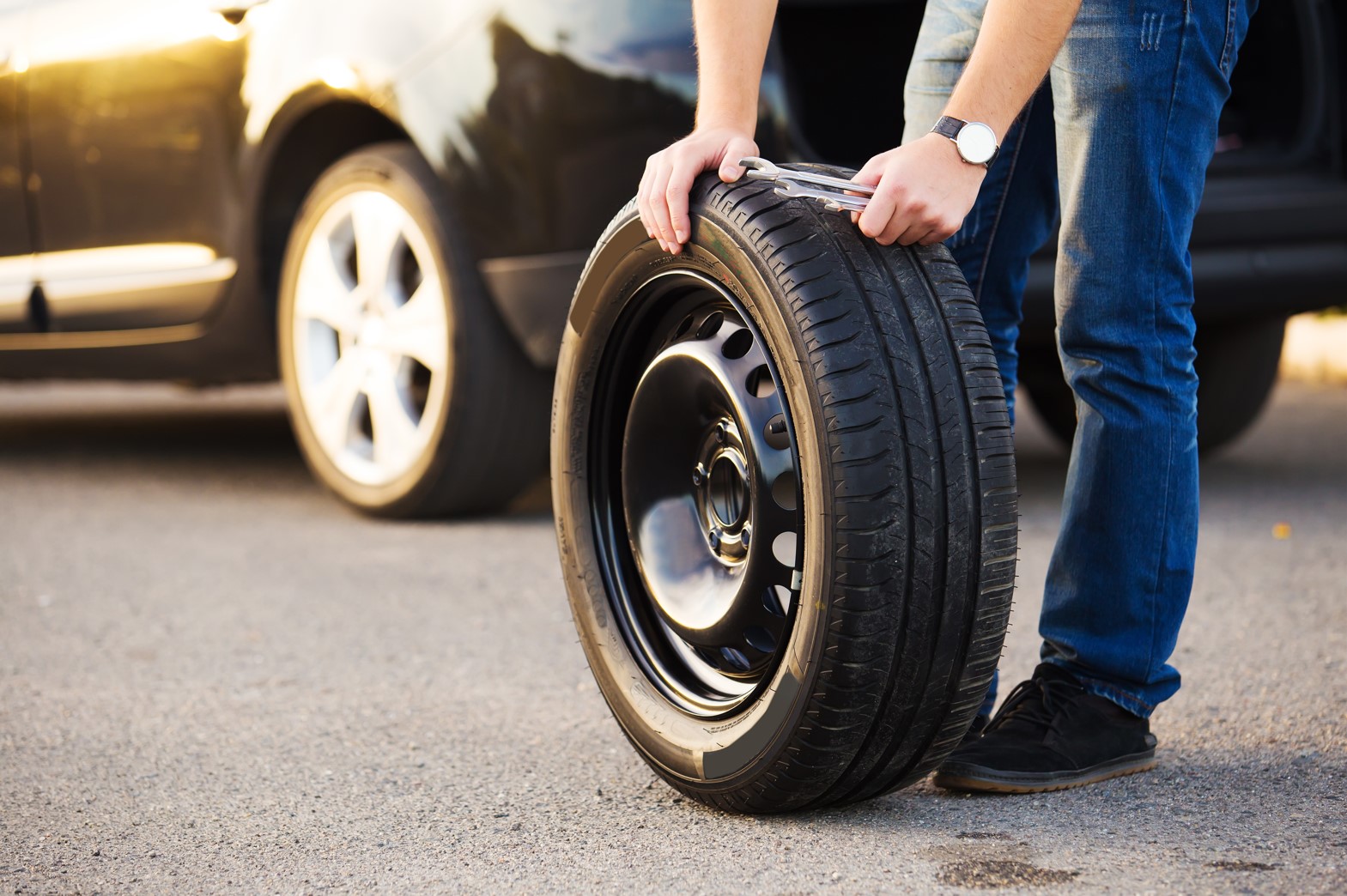
Car manufacturers have changed their approach to spare tires over the past few decades. Older vehicles came with full-size spares that matched the other four tires on your vehicle. Today, most cars include compact space-saver spares to reduce weight and create more trunk space.
The type of spare tire in your vehicle determines how far you drive before you need a replacement. There are three main types:
- Space-Saver (Donut) Spare Tire
- Run-Flat Tire
- Full-Size Spare Tire
Check your owner's manual or look at the spare tire itself to identify which type you have. Each type has different distance and speed limits you need to follow.
How Long Can You Drive on a Space-Saver or Donut Spare Tire?
These narrow, compact spares are designed to save space and weight in the vehicle, allowing the manufacturers to build a smaller car. However, the tire itself is not built to last. Your owner’s manual will give recommendations for driving time and speed.
A general rule of thumb is to drive no farther than 70 miles and no faster than 50 miles per hour before replacing your donut with a new tire.
Warning Signs Your Donut Spare Is Failing
It’s also important to watch for these warning signs when driving on a donut spare:
- Pulling to one side while driving
- Unusual vibrations through the steering wheel
- Dashboard warning lights for traction control or ABS
- Difficulty maintaining control in turns
The biggest reason why you should avoid prolonged use of space-saver or donut tires is that they have little to no tread, making the spare vulnerable to road hazards and projectiles. It is also much smaller than the other three tires, making it spin faster to keep up with the moving car.
How Long Can You Drive on a Run-Flat Tire?
Run-flat tires are becoming more common as manufacturers look to cut costs and save trunk space. If you drive a recent model BMW or MINI, your car likely came with run-flat tires. These tires are built tougher than standard tires, but they're not indestructible.
Instead of including a spare tire, run-flat tires are designed to withstand most road hazards, including punctures. When a traditional tire gets punctured, it goes flat or blows out immediately. A run-flat tire keeps driving. You get about 50 miles after a puncture before the tire needs replacement.
Signs Your Run-Flat Tire Needs Replacement
You have more wiggle room with run-flat tires, but you need to inspect your tire as soon as you notice any change in tire pressure. Check for:
- Visible punctures or damage to the sidewall
- Loss of tread depth on the damaged tire
- Bulging or deformation of the tire shape
- Dashboard warning lights for tire pressure
This inspection tells you how much time you have before the tire fails completely. Don't ignore the warning signs. Even run-flat tires have limits, and pushing past 50 miles on a damaged tire puts you and your passengers at risk.
How Long Can You Drive on a Full-Size Spare Tire?
For years, cars were built with spare tire wells capable of carrying a full-size spare. On many older cars (and a few newer models), this is still the case. If you bought a truck, SUV, or another large vehicle, your car is equipped with a full-size spare. While a full-size spare is heavier and requires more storage space, these tires are more durable and handle drives similar to a regular tire.
A full-size spare gives you more flexibility than a donut. You drive normal speeds and cover normal distances without the same restrictions. The tire is the same size as your other tires, so your vehicle handles more predictably.
Why Full-Size Spares Handle Differently
Here's the catch. A full-size spare tire is usually not produced by the same manufacturer as the rest of the tires on your vehicle. The tread pattern is different. The rubber compound is different. This means the spare handles differently than your other three tires, especially in wet conditions or during hard braking.
You should replace your full-size spare with a matching tire as soon as possible. Watch for these signs while driving on a full-size spare:
- Reduced traction in rain or snow compared to normal
- Slightly different handling during turns or lane changes
- Uneven tire wear developing on your other tires
- Increased road noise from the mismatched tread pattern
Once you take your vehicle to an auto repair shop and learn the punctured tire is irreparable, you request that the spare tire be put on the original rim. This works as a temporary solution. We suggest buying a new tire as soon as you are able, but a full-size spare easily buys you time without the same safety concerns as a donut spare.
Get Spare Tire Services at Christian Brothers Automotive
Don't drive on a spare tire longer than necessary. Whether you need a tire inspection, a replacement, or spare tire services, Christian Brothers Automotive has you covered.
We were born out of the idea of being more than an auto repair shop. We're your neighbor. Our mission is straightforward: To establish a strong presence in the local communities we serve and to deliver an exceptional experience for guests in need of auto service and repair.
To have your tires inspected or to replace a spare tire, call or visit your local Christian Brothers Automotive shop.
[1].jpg "Four Common Services Offered at Auto Repair Centers")
[2].jpg "Make Sure You're Getting Quality Auto Parts")
sunwash-tech-with-customer.png "What is a Car Inspection?")