AC Services in Queen Creek, AZ 85142
Restore cold, consistent comfort with professional A/C diagnostics, recharge, and repair from Christian Brothers Automotive Queen Creek
Does Christian Brothers Automotive Do AC Recharge, and How Much Does It Cost?
Yes—Christian Brothers Automotive Queen Creek performs automotive A/C recharge services, but we do it the right way: by testing the system first, recovering refrigerant safely, and recharging to your vehicle manufacturer’s exact specification. In the Queen Creek heat, an A/C that’s “kind of cool” usually isn’t good enough, so we focus on results you can feel at the vents and reliability you can count on in traffic. Because refrigerant doesn’t get “used up,” a low charge often points to an A/C leak, and identifying that early can help you avoid repeated recharges. For the best outcome, plan on an A/C performance check and diagnostic before simply adding refrigerant.
So, how much does an A/C recharge cost? Pricing varies based on refrigerant type (R-134a vs. R-1234yf), the amount required by your system, and whether we find a leak or failed component during testing. As a general expectation, many vehicles fall into a low-to-mid hundreds range for an evacuate-and-recharge service, while newer vehicles using R-1234yf can cost more due to refrigerant price and specialized handling requirements. The most accurate number is the one we provide after verifying your refrigerant type, measuring system pressures, and confirming the condition of components. To get a clear estimate for your exact make and model, schedule an appointment for A/C diagnostics at our Queen Creek, AZ shop.
What Is Included in a Christian Brothers Automotive Air Conditioning Service Inspection?
Our air conditioning service inspection is designed to answer one key question: why isn’t your A/C performing the way it should? We start with a performance evaluation (vent temperature, airflow, and A/C operation at idle and at higher RPM) because some problems only show up under specific conditions common in Arizona driving. Next, we check pressures and system function to determine whether your issue is low refrigerant, restricted flow, an electrical control problem, or a component failure such as the compressor or condenser fan. You’ll receive straightforward findings and options so you can decide how you want to proceed.
- Vent temperature and airflow testing to confirm cooling performance and blower operation
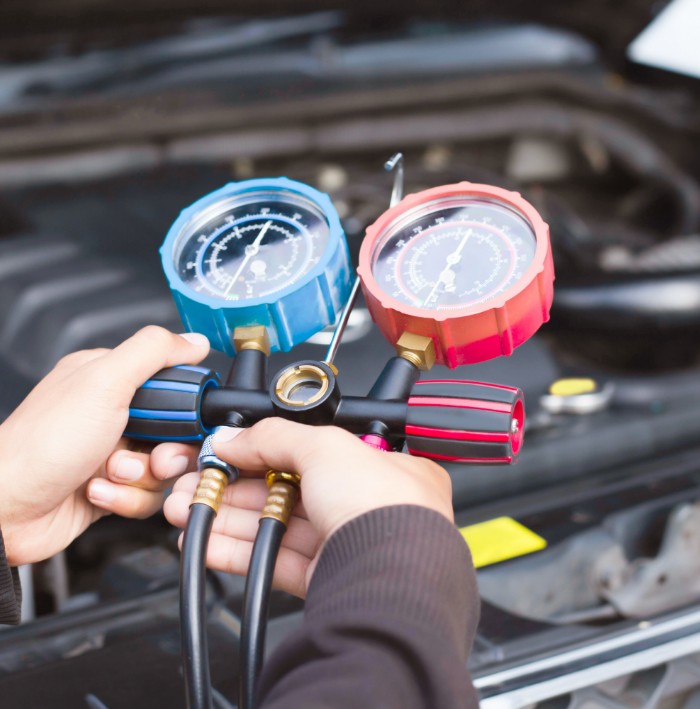
- High- and low-side pressure readings to pinpoint undercharge, overcharge, restriction, or compressor concerns
- Refrigerant-type verification and recommendations for the correct service approach based on your vehicle
- Leak detection checks at common failure points like service ports, O-rings, hoses, the condenser, and compressor seals
- Electrical and control inspection of fuses, relays, A/C clutch command, sensors, and related wiring
- Cooling system and airflow review including condenser condition and radiator fan operation
- Cabin air filter condition check with replacement recommendations if restricted or dirty
If you’re noticing weak airflow, inconsistent temperatures, or musty odors, this inspection is the fastest way to get clarity without guessing. After we review the results with you, we’ll outline repair priorities and provide an itemized estimate before any work begins. For a complete evaluation and a plan tailored to your vehicle, book A/C repair service with Christian Brothers Automotive Queen Creek.
How Do I Know if My Car Needs a Refrigerant Recharge or Has an AC Leak?
The most important thing to know is that refrigerant is not a consumable fluid; if your system is low, it’s usually because refrigerant escaped through a leak. Signs that you may need a recharge include gradually warmer vent temperatures over time, A/C that cools only while driving (but warms at idle), or the compressor cycling on and off more frequently than normal. You might also see oily residue around A/C fittings or the condenser area, which can indicate refrigerant oil escaping with the leak. In Queen Creek’s dusty, high-heat environment, even small leaks can become big performance problems quickly.
A leak can also cause unusual sounds, which leads to a common question: why is my car A/C making a hissing or clicking noise when turned on? A brief hiss can occur when pressures equalize, but persistent hissing may point to refrigerant escaping or a restriction at the expansion valve/orifice tube. Clicking can be as simple as a relay cycling, or it can be the compressor clutch engaging and disengaging repeatedly due to low charge, pressure switch issues, or electrical faults. If you suspect a leak or hear new noises, the best next step is to schedule a leak check and performance test at Christian Brothers Automotive Queen Creek before the system is damaged by low lubrication or overheating.
How Long Does an Automotive AC Diagnostic Take, and What Causes AC to Blow Warm Air?
Most A/C diagnostics can be completed in about 45–90 minutes, depending on the symptoms and whether additional leak testing is needed. Straightforward issues like a failed relay, a pressure sensor fault, or a cooling fan problem can often be identified quickly with testing and scan data. Intermittent concerns, slow leaks, or performance issues that only occur under certain conditions may require additional time so we can test thoroughly and avoid unnecessary parts replacement. Our team will keep you informed throughout the process and explain what we found in plain language.
Car A/C can blow warm air for several reasons, and yes—Christian Brothers Automotive Queen Creek can fix it once we confirm the root cause. Common causes include low refrigerant from a leak, a weak or failing compressor, a stuck expansion valve/orifice tube, blocked condenser airflow, failing radiator fans, electrical issues preventing compressor engagement, or HVAC blend door problems that mix warm air with cooled air. Newer vehicles can also have module-related faults that require scan-based diagnosis rather than guesswork, which is why our diagnostic service is so important. If your A/C is warm, inconsistent, or only cools at certain speeds, schedule a diagnostic so we can restore reliable cold air before the next heat spike hits Queen Creek.
AC Leak Repair vs. Full AC System Replacement (and AC Compressor Symptoms & Options)
Whether an A/C leak repair or a full A/C system replacement is better depends on where the leak is and what damage has occurred. If the leak is isolated—such as a worn O-ring, a leaking service valve, a damaged hose, or a condenser that’s been compromised by road debris—repairing the specific component and then evacuating and recharging the system is usually the most cost-effective solution. However, if a major component fails internally (especially the compressor), debris can spread through the system and contaminate other parts, making a more comprehensive repair the smarter long-term choice. We’ll show you the evidence we find and help you choose a repair path that fits your vehicle, budget, and how long you plan to keep it.
A failing A/C compressor often announces itself with performance issues and noise, and catching it early can prevent collateral damage. Common symptoms include:
- Warm air or intermittent cooling even after the system has been properly charged
- Loud clicking, grinding, or squealing when the A/C is turned on
- Compressor clutch problems such as not engaging, slipping, or rapidly cycling
- Unusual pressure readings that suggest weak compression or internal restriction
Repair options may include replacing a clutch component (when applicable), replacing the compressor, replacing the receiver/drier or accumulator, and addressing restrictions like a faulty expansion valve/orifice tube—plus system flushing when contamination is present. We’ll also confirm the correct refrigerant service approach, including whether your vehicle requires R-134a or R-1234yf, and we use the proper equipment and procedures to evacuate and recharge according to specifications. If you’re unsure whether to repair a leak or consider a larger replacement, schedule an evaluation with our A/C repair team for a clear recommendation.
Can You Evacuate and Recharge R-134a vs. R-1234yf, and How Often Should I Service My AC System & Cabin Air Filter?
Yes—Christian Brothers Automotive Queen Creek can evacuate and recharge both R-134a and R-1234yf systems, depending on what your vehicle is designed to use. Proper service means recovering refrigerant, pulling an appropriate vacuum, verifying the system holds, and recharging by weight so the A/C operates efficiently and protects the compressor. Because R-1234yf systems can be more sensitive to charge accuracy and refrigerant handling, it’s especially important to use the correct equipment and avoid “universal” shortcuts. If you’re not sure which refrigerant your vehicle uses, we’ll identify it during your visit and explain the service plan before proceeding.
In general, your A/C system should be inspected at least once a year in Arizona—ideally before peak summer—because small performance losses become major comfort issues fast in Queen Creek. Your cabin air filter should typically be replaced about every 12,000–15,000 miles or once a year, and even sooner if you drive frequently in dust, construction zones, or on unpaved roads. A clean cabin filter supports stronger airflow, helps the evaporator stay cleaner, and reduces strain on the blower motor, which can make your A/C feel colder and more consistent. For proactive care, ask about cabin air filter replacement and preventive maintenance services, then contact Christian Brothers Automotive Queen Creek in Queen Creek, AZ 85142 to schedule your A/C inspection, diagnostic, or recharge and get back to comfortable driving.