

What to Expect With a Brake Service
1. Schedule Your Appointment
Whether scheduling online or over the phone be sure and let us know what you're experiencing so we can provide fast and accurate service advice.
2. Diagnostics and Inspections
Drop off your vehicle and the shop will get to work with inspections and diagnostics using the same equipment as the manufacturers to determine issues and next steps.
3. Digital Vehicle Inspection Report and Estimate
Following the diagnosis we will text you a digital vehicle inspection report, containing pictures and videos of our findings and recommendations.
4. Review and Approval
A service advisor will reach out to walk you through the findings and recommendations to determine how you would like to proceed, or you can approve work directly in your DVI.
5. Work Performed or Scheduled
Most work can be completed immediately, or scheduled based on parts and customer availability.

Did You Know: It takes up to three football fields to safely brake in the rain?

Signs Your Brakes Need Attention
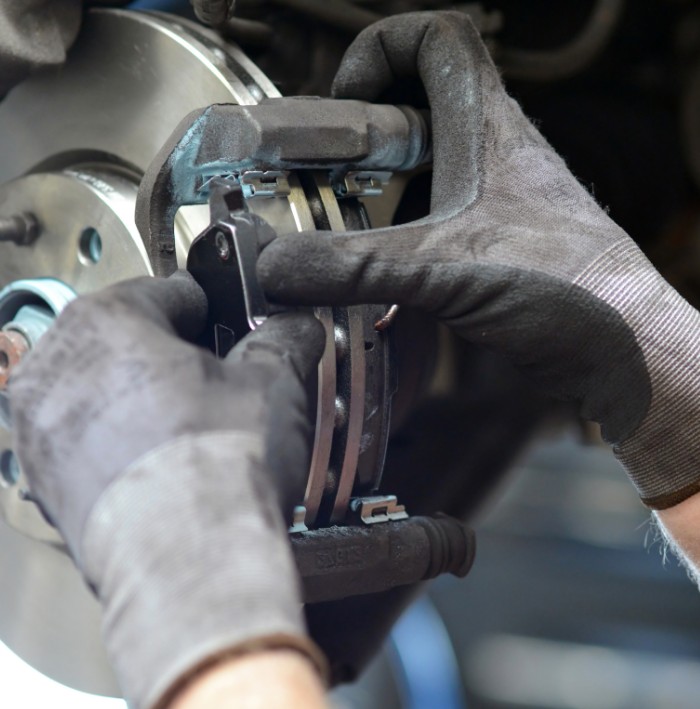
Your vehicle's braking system is vital for your safety on the road. Ignoring signs of brake issues can lead to diminished stopping power, increased repair costs, and potential accidents. Addressing brake problems promptly helps ensure your vehicle operates safely and efficiently.
When you bring your car to us with a brake concern, we first listen closely to how the problem started and when it occurs. Many Aurora drivers notice sounds or vibrations more on certain streets, hills, or during highway driving, and these details help us narrow down whether the issue is likely related to brake pads, rotors, or hydraulic components. By combining what you are experiencing with a careful road test, we focus our inspection on the areas most likely to affect your stopping distance.
Common Indicators of Brake Issues:
- Unusual noises: Squealing, squeaking, or grinding sounds when braking often indicate worn brake pads or other components needing attention.
- Vibrations: Feeling vibrations or pulsations in the brake pedal or steering wheel can suggest warped rotors or other brake system issues.
- Pulling to one side: If your vehicle pulls to one side during braking, it may be due to uneven brake pad wear or other underlying problems.
- Soft or spongy pedal: A brake pedal that feels soft or spongy can indicate air in the brake lines or low brake fluid levels.
- Brake warning light: An illuminated brake warning light on your dashboard signifies a potential issue with your braking system that requires prompt attention.
Frequently Asked Questions
How often should I get a brake inspection?
We recommend a brake inspection at least once a year or every 12,000 miles. However, Aurora drivers who face heavy traffic or severe weather may need more frequent checks. Regular inspections allow us to catch wear early and maintain the safety of your braking system.
What is included in a brake fluid flush?
A brake fluid flush involves removing old, contaminated fluid from the master cylinder and lines and replacing it with fresh fluid. This prevents corrosion and moisture buildup, which can compromise stopping power. It is a vital part of long-term brake maintenance that prevents expensive hydraulic failures.
How often do my brakes need to be serviced?
Routine brake maintenance usually happens every 25,000 to 60,000 miles, depending on your driving habits in Aurora, IL. If you drive frequently in heavy traffic, your brake pads will wear faster. We recommend checking your owner's manual and having a professional check your braking system during every oil change to ensure you stay safe.
Why do my brakes make a loud grinding sound?
A grinding noise typically means your brake pads have worn away completely, resulting in metal grinding against the rotors. This is a critical safety issue that damages the braking system and increases stopping distances. You need immediate brake repair to replace the ruined parts and restore your vehicle’s safety.
Why is my brake warning light on?
A brake warning light can trigger for several reasons, such as low fluid levels, worn brake pads, or a malfunction in the ABS system. It is a critical safety alert that should never be ignored. We recommend visiting our shop immediately to diagnose the specific brake issues.
Is it safe to drive with the brake warning light on?
No, it is not recommended. A brake warning light indicates a serious issue, such as low fluid pressure or a malfunction in the braking system. Continuing to drive can lead to total brake failure. We advise contacting us immediately for a brake inspection to identify and fix the underlying brake issues before driving further.
How do I know if I need new rotors?
If you feel a pulsation or vibration in the steering wheel or pedal when stopping, your rotors may be warped or worn unevenly. During our brake checks, we measure rotor thickness to determine if they can be resurfaced or if a replacement is necessary for safety.
Can I just replace the brake pads?
While brake pad replacement in Aurora is common, it is often necessary to address rotors simultaneously. Putting new pads on damaged rotors can lead to noise and reduced braking efficiency. We assess the entire system to ensure your brake repair provides lasting, safe results.
Your Local Christian Brothers Amenities
FAQs
-
Q. "Why is my ABS light on?"There are several reasons your vehicles anti-lock brake system light might be on. The four common reasons that typically cause this light to turn on include a malfunctioning ABS module, low levels in the fluid reservoir, broken wheel speed sensors, or the system is turned off. Learn more here.
-
Q. "How long will my brake pads last?"There is no perfect answer to this. Brake pads can last up to 70,000 miles while others will need to be replaced as early as 25,000 miles. The type of vehicle you drive, how you use your vehicle and your driving style are all factors to consider. If you are interested in learning more about brake pad wear and how to extend its lifespan click here.
-
Q. "When do I need to change my brake fluid?"Along with the type of brake fluid, your car’s owner manual will indicate how often you need your brake fluid flushed and replaced. In general, brake fluids flushes are recommended every 30,000 miles or two years. Click here to learn more.
-
Q. "Do you offer a warranty?"As part of our Nice difference.® commitment to providing our customers the best auto service experience possible, we also offer a3-year/36,000-mile warranty on all the work that we do. We offer this warranty at every Christian Brothers Automotive nationwide, and it will be honored at any location, regardless of which branch did the initial work.
-
Q. "What is a Digital Vehicle Inspection?"With a complimentary Digital Vehicle Inspection (DVI) on every visit, you’ll see firsthand photos of your vehicle from under the hood. We’ll let you know if everything is functioning properly or if there are any areas of concern. You can even approve or deny our service recommendations, all straight from your smartphone, or you can, of course, give us a call and we’ll explain our findings in further detail.
-
Q. "Can you provide service under my extended warranty?"Yes. At Christian Brothers Automotive, we work with all major extended warranty providers to make needed repairs for our customers. If you have an extended warranty, you can discuss your carrier with our team when scheduling an appointment and confirm that the work will be covered. You can find a partial list of the extended warranty companies we work with here.
Have more Questions?
Our friendly auto service experts have the answers.
Call your local Christian Brothers Automotive car shop today
Hear What Our Customers Had to Say About Us
-
"As always perfect customer service and a job. Well done in a timely manner. Thank you so much to the team."
- Ingrid