What a Proper Vehicle Inspection Should Actually Include
When you bring your vehicle in for service, you may hear the phrase “complimentary inspection.” But not all inspections are equal — and not all are thorough.
A proper inspection should give you clarity, not confusion.
Here’s what it should include.
1️. Safety Systems
A true inspection always checks:
- Brake components (pads, rotors, calipers)
- Steering and suspension
- Tires (tread depth + wear patterns)
- Lights and visibility
Safety items are never optional conversations. They are explained clearly and prioritized properly.
2️. Fluid Condition — Not Just Levels
Many quick checks only confirm fluid levels.
A real inspection looks at:
- Fluid color and contamination
- Burnt odor
- Leaks or seepage
- Age and mileage since last service
Condition matters more than just “full.”
3️. Battery and Charging System
Modern vehicles rely heavily on electronics.
A proper inspection evaluates:
- Battery health
- Corrosion at terminals
- Starting reliability
Many battery failures show warning signs before complete failure.
4️. Wear Patterns and Trends
A strong inspection doesn’t just look at today — it looks at patterns:
- Uneven tire wear
- Recurring leaks
- Repeat suspension wear
- Fluid breakdown trends
Understanding patterns helps prevent repeat repairs.
5. Clear Communication
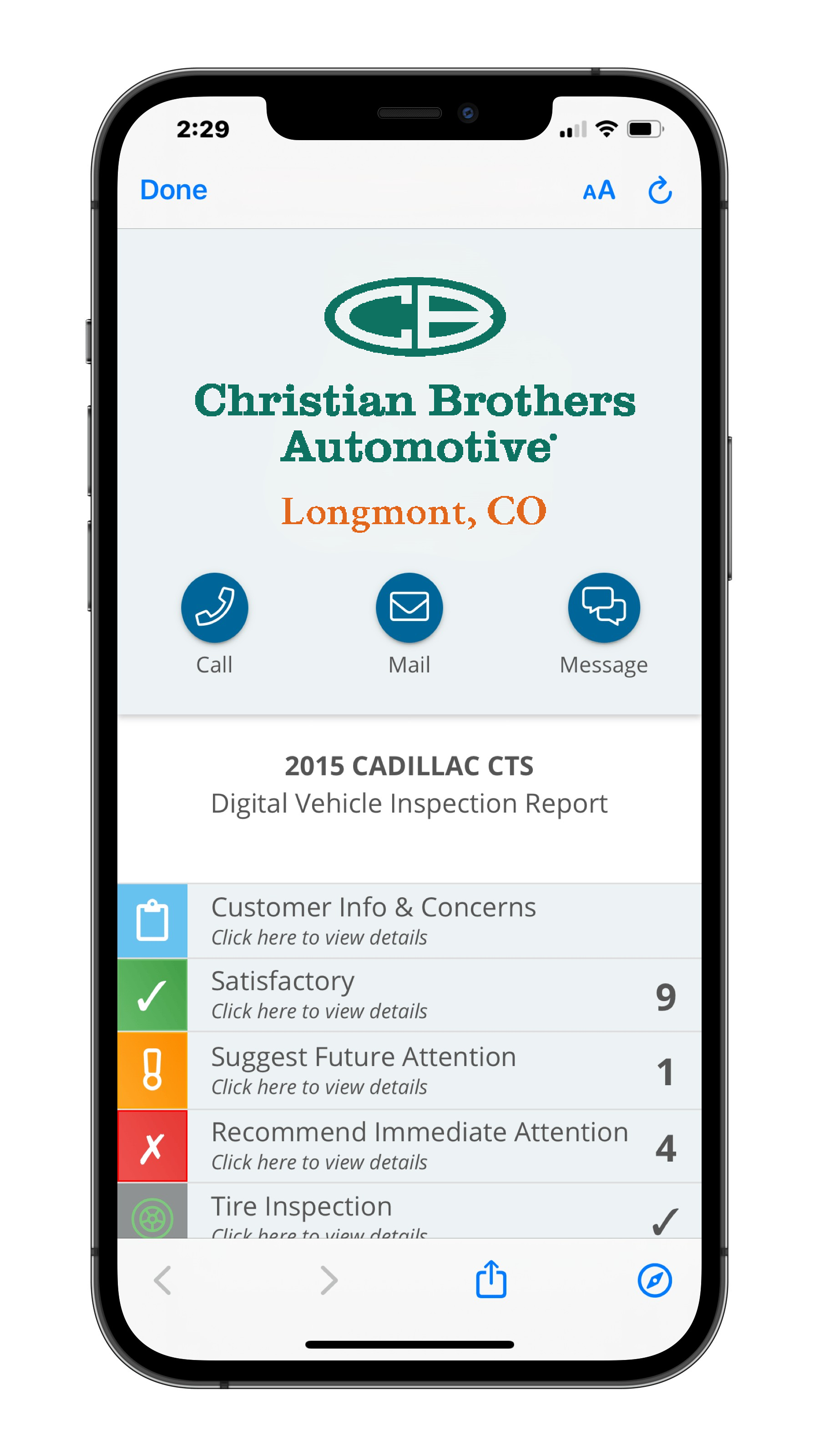
The most important part of an inspection isn’t what’s found — it’s how it’s explained.
You should leave knowing:
- What’s urgent
- What can wait
- What’s preventive
- What’s optional
You should never leave confused.
The Bottom Line
An inspection should reduce uncertainty, not increase it.
At Christian Brothers Automotive Longmont, our goal is to provide inspections that educate first — so you can make confident decisions without pressure.
[1].jpg "Four Common Services Offered at Auto Repair Centers")
[2].jpg "Make Sure You're Getting Quality Auto Parts")
sunwash-tech-with-customer.png "What is a Car Inspection?")