Why Is My Tire Pressure Light On? What Longmont Drivers Should Know
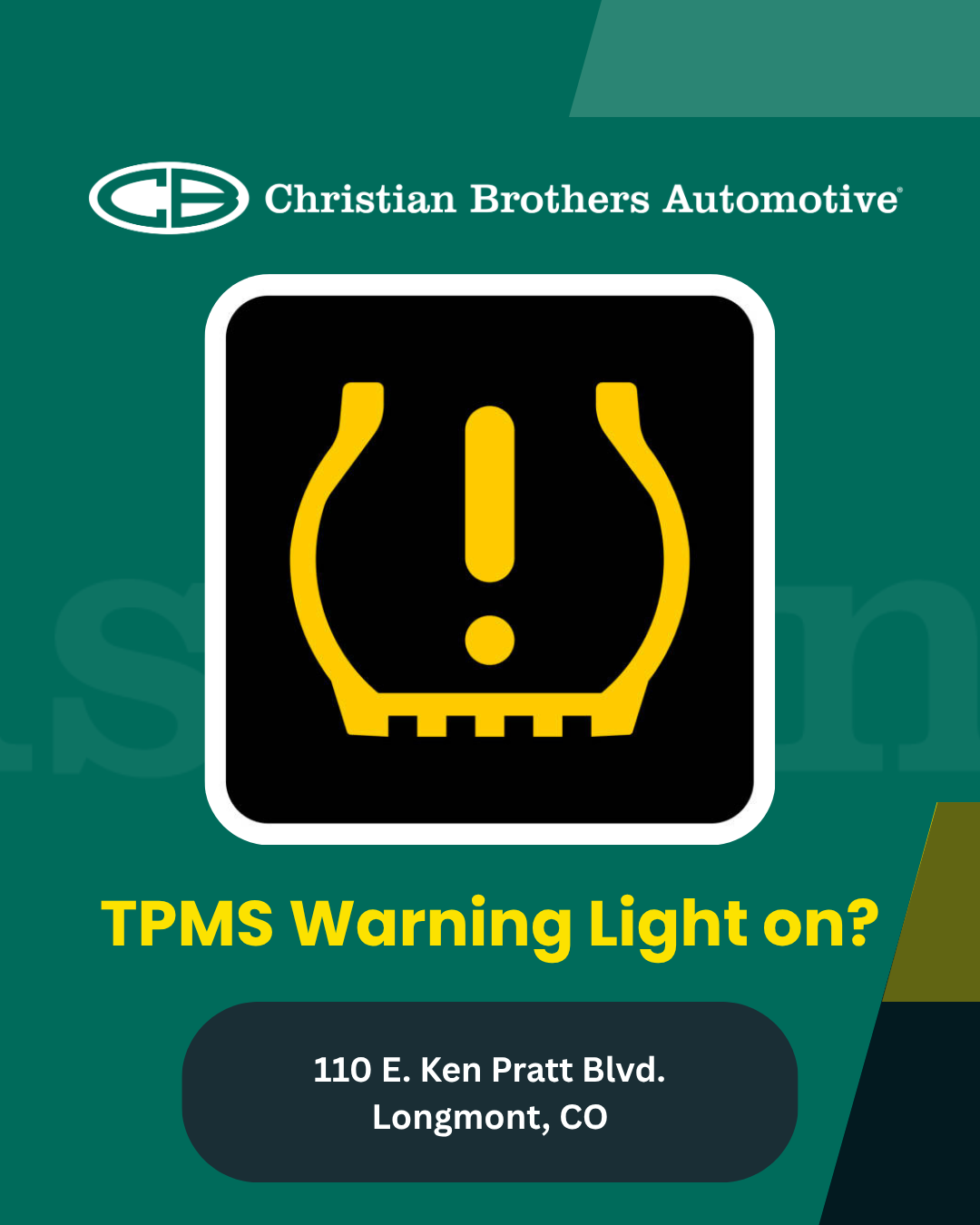
You walk out your front door on one of those brisk, autumn mornings in Longmont. You start up the SUV, turn on the defroster, and suddenly catch a glowing amber icon staring back at you from the dash: the Tire Pressure Monitoring System (TPMS) warning light.
Your tires looked totally fine when you parked after work yesterday. Did you run over a stray nail on Main St or Hover St right before pulling into the driveway?
Maybe. But there's another hugely common explanation this time of year: Mother Nature dropped the thermostat.
As northern Colorado shifts from scorching summer afternoons into crisp fall mornings, dashboard tire lights start popping up all across town. Here is the science behind why it happens, what your car is trying to tell you, and how our team handles it in the shop.
1. The Physics of Cold Air: Why Pressure Plummets
The air pressure inside your tires is directly tied to ambient outdoor temperatures. When the temperature outside drops, the air molecules inside your tire contract and pull closer together, causing the internal pressure to drop.
The Front Range Rule of Thumb:
👉 For every 10°F drop in outside temperature, your tires lose roughly 1 PSI of pressure.
Think about how wild our local weather swings get. If our ASE-certified technicians (Tyler, Joe, or Alex) set your tires to 35 PSI on a 90-degree afternoon in August, and you wake up to a sudden 40-degree cold snap off Ken Pratt Blvd, your tires can easily lose 4 PSI overnight.
That sudden drop is usually more than enough to trigger your TPMS warning sensor. Nothing on your car necessarily broke—it's just physics at work.
2. Don't Just Ignore It Because It's Cold
While a cold snap explains why the pressure dropped, it doesn't mean you should leave your tires running underinflated.
Driving on underinflated rubber flexes the tire sidewalls excessively, generating dangerous internal heat, wearing down your tread prematurely, and reducing your gas mileage on your commute down Highway 119 or I-25.
When that light clicks on, pull out a reliable pressure gauge and check all four tires. Cold weather might be the primary cause, but you could still have a hidden nail, a leaking valve stem, or minor wheel rim corrosion that needs attention. Temperature is a possibility—not an automatic pass.
3. The Door Jamb Number vs. The Sidewall Number
This is hands-down one of the most common mistakes local drivers make: Do NOT inflate your tire to the PSI number stamped on the tire sidewall.
That sidewall number is the maximum pressure the tire casing can physically handle at maximum load, not what your specific vehicle is engineered to run on.
Instead, open your driver’s door and look at the white and yellow vehicle safety placard glued to the door jamb. That sticker lists the exact recommended front and rear PSI specs calculated by the vehicle's engineers for optimal safety, braking, and tread life. Always measure and adjust pressure when the tires are "cold" (meaning the car has been parked for a few hours).
4. Why Did the Light Turn Off After Driving 10 Minutes?
You leave the house with the warning light glowing. By the time you drop the kids off at school and hit the highway toward Boulder, the light magically disappears. Problem solved, right?
Not quite. As your tires roll along the pavement, friction generates internal heat. That heat forces the air inside the tire to expand again, artificially boosting the PSI just enough to satisfy the TPMS sensor and turn off the light.
However, as soon as your car sits parked and cools down, that pressure will plummet right back into the danger zone. The light shutting off temporarily doesn't magically put air back into your tires.
5. What If Only ONE Tire Is Low?
If crisp autumn air is the culprit, pressure typically drops relatively evenly across all four tires.
However, if three of your tires are reading right at 34 PSI and one lone tire is sitting down at 26 PSI, our alarm bells start ringing. A single low tire strongly points to:
- A small nail or screw buried in the tread blocks
- A dry-rotted or leaking rubber valve stem
- A slow bead leak caused by corrosion along the wheel rim
- Recent pothole impact damage from summer road construction
Continuously pumping air into a tire with an active puncture isn't maintenance—it's a breakdown waiting to happen on your next weekend trip to Estes Park or Rocky Mountain National Park.
6. Solid Light vs. Flashing Light: Know the Difference
Your dashboard TPMS light communicates two very different messages depending on how it behaves when you turn the key:
- Solid Yellow Light: Low tire pressure detected in one or more tires. Check and top off your air.
- Flashing Light (Flashes for 60 seconds, then stays solid): The system has detected a fault with the TPMS hardware itself.
A flashing light usually means a dead internal battery inside one of your wheel sensors (they typically last 5 to 7 years), a broken sensor, or a system programming fault. Adding air won't fix a flashing light; the system needs to be evaluated in a bay.
7. Don't Forget the "Fifth Tire"
There is one tire almost every driver completely forgets about: the spare under the trunk floor.
If your gas or diesel SUV carries a traditional donut or full-size spare, that tire loses pressure over time just like the four on the pavement. There is nothing more frustrating than getting a flat on the side of the road, pulling out the spare, and discovering it’s totally flat, too. Ask us to check your spare pressure during your next visit!
See the "Raw Proof" on Your Phone
At our shop at 110 East Ken Pratt Blvd, we believe in total transparency. We don't believe in guessing when it comes to your family's road safety.
When you bring your vehicle in, our service advisors—Bryan, Josh, Mark, or Bob—will set you up with a comprehensive Digital Vehicle Inspection (DVI).
Our ASE Certified technicians (Tyler, Joe, and Alex) will measure your exact tread depths, inspect for hidden punctures, test sensor signals, and document everything with real photos and videos. We text that visual report straight to your smartphone so you see the exact physical evidence before authorizing any work.
The Nice Difference Experience:
- Zero Disruption: Drop your car off and take our clean Local Courtesy Shuttle back home or to work so your day stays completely on track.
- Nationwide Peace of Mind: Any qualifying tire sensor repairs or mechanical work we perform are backed by our industry-leading 3-year/36,000-mile nationwide warranty (whichever comes last).
Is your tire pressure light giving you grief on these chilly fall mornings? Don't stress or guess. Call Josh, Lindsy, and the team today at 720-605-0932 or swing by the shop!
[1].jpg "Four Common Services Offered at Auto Repair Centers")
[2].jpg "Make Sure You're Getting Quality Auto Parts")
sunwash-tech-with-customer.png "What is a Car Inspection?")