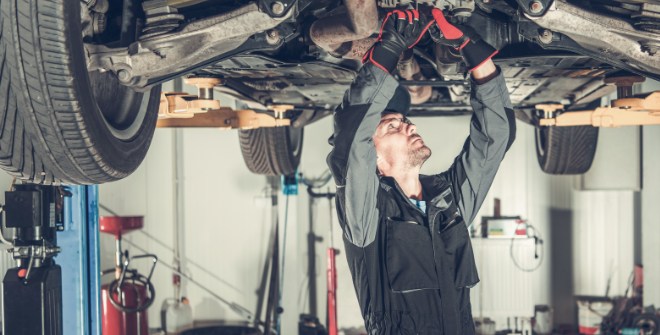

Why Does My Car Smell? 7 Common Car Smells Longmont Drivers Shouldn't Ignore
Sometimes your vehicle gives you a clear warning sign long before an orange icon pops up on your dashboard: you smell it.
Maybe you step out of your SUV in the driveway and catch a sweet, syrup-like scent in the air. Maybe you turn on your A/C on a hot afternoon on Hover St and get hit with the odor of an old gym bag. Or maybe you're cruising down I-25 on your daily commute to Boulder and think: “Is that burning smell coming from MY car?”
Different automotive issues produce remarkably distinct odors. While a smell alone isn't enough to pinpoint a specific repair, what you smell, when you smell it, and where it's coming from give our technicians vital clues.
At Christian Brothers Automotive Longmont, local owners Josh and Lindsy Jeanneret ground our whole culture in "The Nice Difference". That means using real diagnostics and visual evidence—never wild guesses or high-pressure sales pitches. Here is how our ASE-certified techs—Tyler, Joe, Alex, and the team—break down seven common vehicle smells.
1. A Sweet, Syrup-Like Smell
- What it smells like: Maple syrup, sugary candy, or hot engine fluid.
- The potential culprit: Engine coolant (antifreeze).
- What’s happening: Coolant has a distinctly sweet odor. If you smell it around your vehicle—especially after parking—you likely have a cooling-system leak. You might also notice your fluid reservoir dropping, steam coming from under the hood, or a sweet scent blowing directly through the A/C vents.
- The risk: Don't just keep topping off the reservoir. Catching a small coolant weep early prevents catastrophic engine overheating during high-altitude summer drives up to Estes Park.
2. A Burning Oil Smell
- What it smells like: Hot, acrid, smoky oil.
- The potential culprit: Motor oil leaking onto hot engine surfaces or exhaust manifolds.
- What’s happening: Oil leaks don't always leave a puddle on your garage floor. Fluid can seep onto a scorching exhaust pipe and burn off instantly, pulling smoky fumes through your HVAC vents while you're idling in stop-and-go traffic on Ken Pratt Blvd.
- The risk: Ignored oil leaks degrade rubber engine mounts, damage wiring harnesses, and pose potential fire risks if severe enough.
3. A Burning Rubber Smell
- What it smells like: Melting tires, a hot rubber belt, or electrical friction.
- The potential culprit: Slipping serpentine belts, misrouted hoses, or seized pulleys.
- What’s happening: If a drive belt is loose, misaligned, or slipping over a frozen pulley (like a failing A/C compressor or alternator bearing), intense friction generates immediate heat and burning rubber fumes.
- The risk: A snapped serpentine belt will immediately disable your alternator, water pump, and power steering, leaving you stranded away from home.
4. A Rotten Egg or Heavy Sulfur Smell
- What it smells like: Eggs, sewer gas, or heavy sulfur.
- The potential culprit: Catalytic converter or fuel mixture issues.
- What’s happening: Unburned hydrogen sulfide in your exhaust is supposed to be converted into odorless gases by your catalytic converter. If the converter is overloaded, damaged, or your engine is running too rich, that sulfur smell builds up fast.
- The risk: Never replace a catalytic converter based on smell alone! Replacing a converter without diagnosing why it overheated is a multi-thousand-dollar mistake. Proper engine diagnostics must come first.
5. A Raw Gasoline Smell
- What it smells like: Straight from the pump fuel fumes.
- The potential culprit: Fuel line leaks, failing evaporative emissions (EVAP) purge valves, or injector seals.
- What’s happening: Gasoline vapors should be completely sealed inside your fuel and EVAP systems. If you catch a strong whiff of raw gas inside the cabin or in your garage after parking, there is a leak.
- The risk: This is a safety concern we take seriously. Raw fuel fumes are highly flammable; if you see active fuel dripping under your car, pull over safely and call for a tow.
6. A Musty, Mildew Smell from the A/C
- What it smells like: Dirty gym socks, a damp basement, or wet towels.
- The potential culprit: Mold/microbial growth on the A/C evaporator or a filthy cabin air filter.
- What’s happening: Colorado's rapid daily temperature swings create condensation inside your dashboard's HVAC housing. Dust, pollen, and debris settle in that moisture, creating a breeding ground for mildew.
- The fix: Replacing a clogged cabin air filter or performing an HVAC evaporator case cleaning clears the air fast.
7. A Burning Smell After Braking
- What it smells like: Sharp, acrid, metallic, or chemical smoke.
- The potential culprit: Overheated brake pads or a dragging caliper.
- What’s happening: If you just rode your brakes down a steep mountain pass coming back from Rocky Mountain National Park, extreme heat is normal. But if you smell this during regular driving on Main St, a caliper piston or emergency brake cable may be stuck, forcing the pad against the rotor constantly.
- The risk: Dragging brakes boil your brake fluid, glaze your pads, and warp expensive rotors.
The Clues We Need: WHEN Do You Smell It?
When you bring your gas, diesel, hybrid, or EV to our shop at 110 East Ken Pratt Blvd, the little details make all the difference:
- "I smell something sweet only after I park in the garage."
- "I catch a burning oil smell when idling at red lights on Ken Pratt."
- "The musty smell hits the second I turn on the A/C defroster."
- "I smelled burning metal after coming down the canyon from Estes Park."
These specifics help our technicians narrow down their diagnostic path immediately.
Stop Guessing: Get "Raw Proof" on Your Smartphone
Google is great for looking up possibilities, but it can't diagnose your vehicle. A smell is a clue—a physical inspection is the answer.
Our front desk team—Bryan, Josh, Mark, and Bob—uses Digital Vehicle Inspections (DVI) to give you absolute clarity. Our master techs (Tyler, Joe, and Alex) will put your vehicle on the lift, inspect the fluid lines, pressure-test your cooling system, or inspect your belt drive, attaching real photos and video clips to a digital report texted straight to your phone.
The CBA Longmont Difference:
- Full Transparency: We prioritize findings into what is urgent for safety, what can be planned for later, and what is totally fine. You stay in complete control of your budget.
- Local Convenience: Drop your car off and take a ride home or to work in our clean Local Courtesy Shuttle.
- Industry-Leading Protection: We back all qualifying parts and labor with our 3-year/36,000-mile nationwide warranty (whichever comes last).
Noticing an unusual odor under your hood? Don't wait for a breakdown to give you the answer. Call Josh, Lindsy, and the team today at 720-605-0932 to schedule an inspection!
[1].jpg "Four Common Services Offered at Auto Repair Centers")
[2].jpg "Make Sure You're Getting Quality Auto Parts")
sunwash-tech-with-customer.png "What is a Car Inspection?")