
Why Is My Car Heater Blowing Cold Air? — What Longmont Drivers Should Know
It happens every October. The first real cold front rolls down off the foothills, you head out to scrape the frost off the windshield on Hover St, climb in, crank the heat all the way up… and the vents blow air that's just as cold as the morning.
Five minutes later, still cold. Ten minutes later, you're driving down Main St with your breath fogging the inside of the glass.
Here's the good news: a heater that blows cold air is almost never a mystery. Your car's heat doesn't come from a separate furnace—it comes from the engine. Hot coolant flows from the engine through a small radiator behind your dashboard called the heater core, and a blower fan pushes air across it and into the cabin. When that chain breaks anywhere along the way, you get cold air.
At Christian Brothers Automotive Longmont, local owners Josh and Lindsy Jeanneret ground our whole shop culture in "The Nice Difference®"—and that means finding the real cause before recommending a single part. Here's how our ASE-certified techs—Tyler, Joe, and Alex—track down a cold heater.
1. Low Coolant — The Most Common Culprit
If there isn't enough coolant in the system, the hot coolant may never make it to your heater core, which often sits at one of the highest points of the cooling system.
And coolant doesn't just disappear. If it's low, it's going somewhere: a weeping hose, a leaking water pump, a radiator seep, or a heater core leaking inside the dash. Topping it off might bring the heat back for a few days, but it doesn't fix the leak. As we covered in our coolant article, a small leak caught early is far cheaper than an overheated engine on the way up to Estes Park.
Safety first: never open the radiator or coolant cap on a hot engine. The system is under pressure, and hot coolant can cause serious burns.
2. Air Trapped in the Cooling System
This one surprises a lot of drivers. You topped off the coolant, the reservoir looks full… and there's still no heat.
An air pocket trapped in the system can block hot coolant from circulating through the heater core. Air pockets can also cause erratic temperature readings and even overheating.
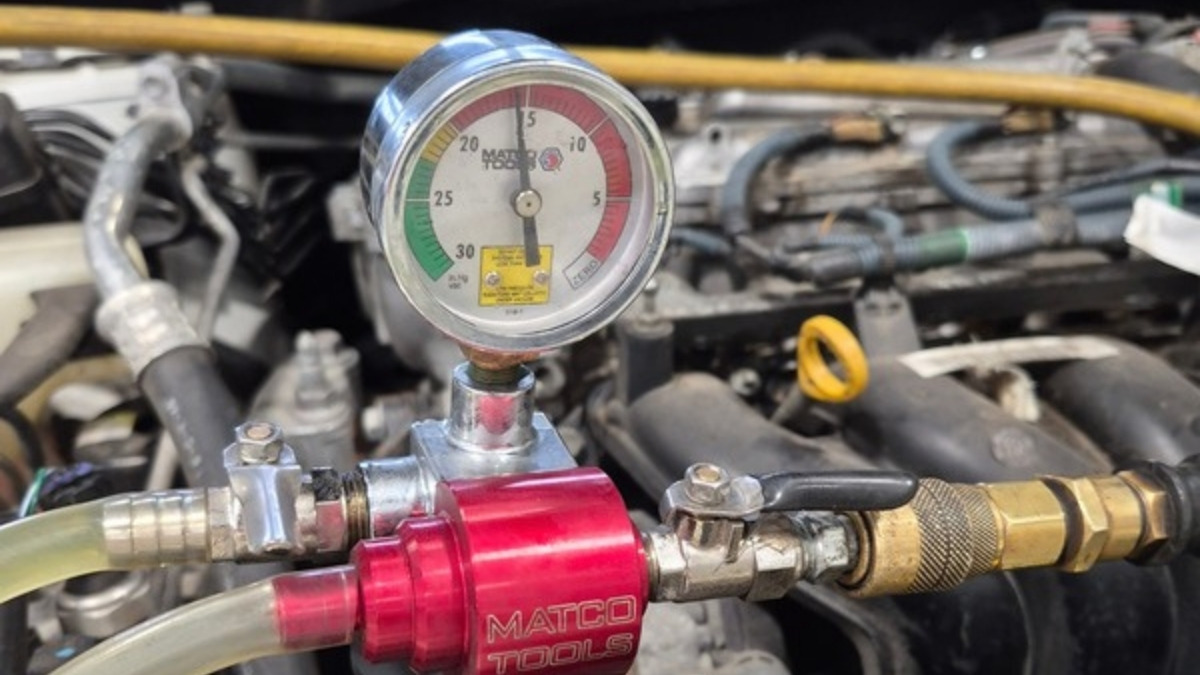
That's why our techs don't just pour coolant in and hope. We use a vacuum fill tool that pulls the air out of the cooling system and then draws coolant in to fill it properly—the photo at the top of this article is that tool on a vehicle in our bay.
3. A Thermostat Stuck Open
Your thermostat is a valve that stays closed while the engine warms up, then opens to keep it at the right temperature. If it sticks open, coolant flows to the radiator all the time and the engine struggles to reach full operating temperature—especially on a 25-degree morning.
Warning signs:
- Your temperature gauge sits lower than normal or takes forever to climb
- The heat is lukewarm at best, especially at highway speeds on I-25 or Highway 119
- Fuel economy drops
- On many vehicles, a check engine light for low engine temperature
A thermostat stuck open won't usually leave you stranded, but an engine that runs too cold isn't running the way it was designed to.
4. A Clogged Heater Core
Over time, coolant that's never been serviced breaks down and can leave deposits that restrict flow through the heater core's tiny passages. The engine may be at full temperature and the coolant full—but very little hot coolant actually makes it through the core.
A leaking heater core sends its own signals: a sweet smell inside the cabin, a greasy film fogging the inside of the windshield, or a damp passenger-side floor. If you notice any of those, have it checked—coolant isn't something you want to breathe or sit in.
5. A Stuck Blend Door
Behind your dashboard, small doors called blend doors direct air either across the heater core or around it. Many are moved by small electric motors called actuators.
If an actuator fails, the door can get stuck on the cold side—so the engine and heater core are hot, but the air never goes past them. A telltale sign is a clicking or tapping noise behind the dash when you change the temperature or vent settings.
6. Weak Airflow: Cabin Filter and Blower
Sometimes the air is warm but there just isn't much of it.
- A clogged cabin air filter—often packed with leaves, dust, and Colorado dirt—can choke airflow for heat, A/C, and defrost. We check your cabin air filter during the free courtesy inspection that comes with any service.
- If your fan only works on the highest setting, a failing blower motor resistor or control module is a common cause.
- A blower motor that's noisy, intermittent, or dead needs attention before winter, not during it.
7. Combustion Gases in the Coolant
Less commonly, a failing head gasket can push combustion gases into the cooling system, creating air pockets and pushing coolant out of the reservoir. A heater that goes cold along with unexplained coolant loss is worth a closer look. Our techs can run a combustion leak (block) test to check the coolant for exhaust gases before anyone starts guessing about expensive repairs.
Why "No Heat" Is a Safety Issue
Cold air isn't just uncomfortable. Your defroster uses the same system. If your windshield won't clear on a frosty morning, you're driving with limited visibility on Ken Pratt Blvd or merging onto the highway—and that's a safety problem, not just a comfort one.
The "Longmont Factor"
Front Range weather makes heater problems show up fast. We can go from a 75-degree afternoon to a frosty 28-degree morning in a single day, and the first cold snap of fall is usually when a weak thermostat, a slow coolant leak, or a sticky blend door finally gets noticed. If your heat has been "a little slow to warm up" for a while, now—before the first big snowstorm—is the time to find out why.
Diagnose First. Then Decide.
The same symptom—cold air—can come from a few dollars of coolant or a repair behind the dashboard. Guessing gets expensive. At our clean shop at 110 East Ken Pratt Blvd, our techs check your coolant level and condition, look for leaks, confirm whether the engine is reaching temperature, check for coolant flow to the heater core, and test the HVAC controls. Then we text you photos and findings through our Digital Vehicle Inspection (DVI), so you see exactly what we see before you decide anything.
The Nice Difference® Experience:
- Transparent Results: We separate what's urgent from what can wait, so you stay in control of your budget.
- Free Courtesy Inspection with Any Service: Includes a fluid check (coolant level included) and a cabin air filter check—plus a free battery test, which is perfect timing before winter.
- Zero Disruption: Drop your car off with Bryan, Josh, Mark, or Bob at the front counter and ride home or to work on our Local Courtesy Shuttle.
- Nationwide Peace of Mind: Qualifying repairs are backed by our industry-leading 3-year/36,000-mile nationwide warranty (whichever comes last).
Don't spend the winter scraping the inside of your windshield. Call Josh, Lindsy, and the team today at 720-605-0932, or book online at scheduler.cbac.com/longmont!
[1].jpg "Four Common Services Offered at Auto Repair Centers")
[2].jpg "Make Sure You're Getting Quality Auto Parts")
sunwash-tech-with-customer.png "What is a Car Inspection?")