Why Coolant Maintenance Matters — And How It Can Help Prevent Expensive Engine Repairs
Most drivers know their engine needs coolant to keep from boiling over on a hot August afternoon. Far fewer realize that the coolant itself is a critical maintenance item.
As long as there's bright fluid in the reservoir and the temperature gauge stays right in the middle while you're sitting at a red light on Main St, it's easy to assume everything under the hood is fine. But coolant doesn't last forever. Over time, the specialized chemical additives that regulate heat, fight off internal rust, and lubricate your cooling system begin to break down.
When that happens, your cooling system stops protecting the most expensive part of your vehicle: your engine.
At Christian Brothers Automotive Longmont, local owners Josh and Lindsy Jeanneret practice an "Education Before Approval" philosophy. We know that an affordable fluid service is always better than facing a massive, unexpected engine overhaul. Here is what our ASE-certified team—Tyler, Joe, Alex, and the crew—want every Longmont driver to know about their cooling system.
1. Coolant Does Far More Than Keep Your Engine Cool
We call it "coolant," but managing temperature is only a fraction of its job. High-grade engine coolant is a complex chemical formula engineered to:
- Transfer destructive heat away from the combustion chamber.
- Prevent the fluid from freezing solid during a -10°F Front Range winter night.
- Elevate the boiling point so your engine can run safely at peak operating temperatures.
- Protect internal aluminum, steel, and copper parts against corrosive rust.
- Lubricate the internal mechanical seals of your water pump.
This means the physical and chemical condition of your coolant matters just as much as whether the plastic overflow tank looks full.
2. Coolant Breaks Down (Even Without a Leak)
The protective additives in modern anti-freeze don't last indefinitely. As coolant ages through thousands of heat cycles, it gradually becomes acidic. Instead of preventing corrosion, old coolant actively eats away at your cooling system from the inside out, damaging:
- Radiator cores and plastic end tanks
- Water pump impellers and seals
- Heater cores (leaving you with no cabin heat in December)
- Thermostat housings and timing cover gaskets
A car can have a completely full coolant reservoir while circulating fluid that is long overdue for a service.
3. Small Leaks Are Early Warning Signs
Notice a sweet-smelling aroma after pulling into the driveway? See a tiny bright green, orange, or pink puddle on the garage floor? Or maybe your coolant level drops slightly every few weeks?
Don't ignore it! A small leak usually points to a weeping hose connection, a hairline fracture in a plastic coolant tank, or an aging water pump seal. Catching a tiny leak while it’s manageable allows us to fix the root cause before you lose enough fluid to cause an engine-destroying overheat.
4. Overheating Gets Expensive Fast
Your engine is built to operate within a very tight thermal range. If an aging cooling system fails to dissipate heat—especially while climbing steep grades or idling in traffic on Ken Pratt Blvd—engine temperatures will spike rapidly. Severe overheating can warp aluminum cylinder heads, blow head gaskets, score cylinder walls, or completely destroy the engine block.
A routine cooling-system flush or hose replacement is a fraction of the cost of replacing an entire engine.
5. The "Front Range Factor": Why Colorado Is Extra Hard on Coolant
Driving in and around Longmont presents extreme demands on your vehicle’s cooling system:
- Sudden 40-degree temperature drops within 12 hours.
- Heavy, stop-and-go idling along Hover St.
- Pushing high-altitude passes on weekend trips to Estes Park or Rocky Mountain National Park.
- Descending long mountain grades where engine braking generates intense thermal loads.
Your cooling system has to manage internal engine temps through all of it. That is why fluid health is so critical in northern Colorado.
6. Never Guess with Coolant Specs
Coolants are definitely not "one-size-fits-all". European, Asian, and Domestic manufacturers require completely different chemical formulations (HOAT, OAT, P-OAT). Mixing the wrong coolants together can cause issues with the fluid itself, or lead to component damage.
Our technicians look at your manufacturer specifications, mileage, vehicle age, and real fluid clarity before making any recommendations.
Get the "Raw Proof" on Your Phone
At our shop at 110 East Ken Pratt Blvd, our service advisors—Bryan, Josh, Mark, and Bob—believe in showing, not just telling.
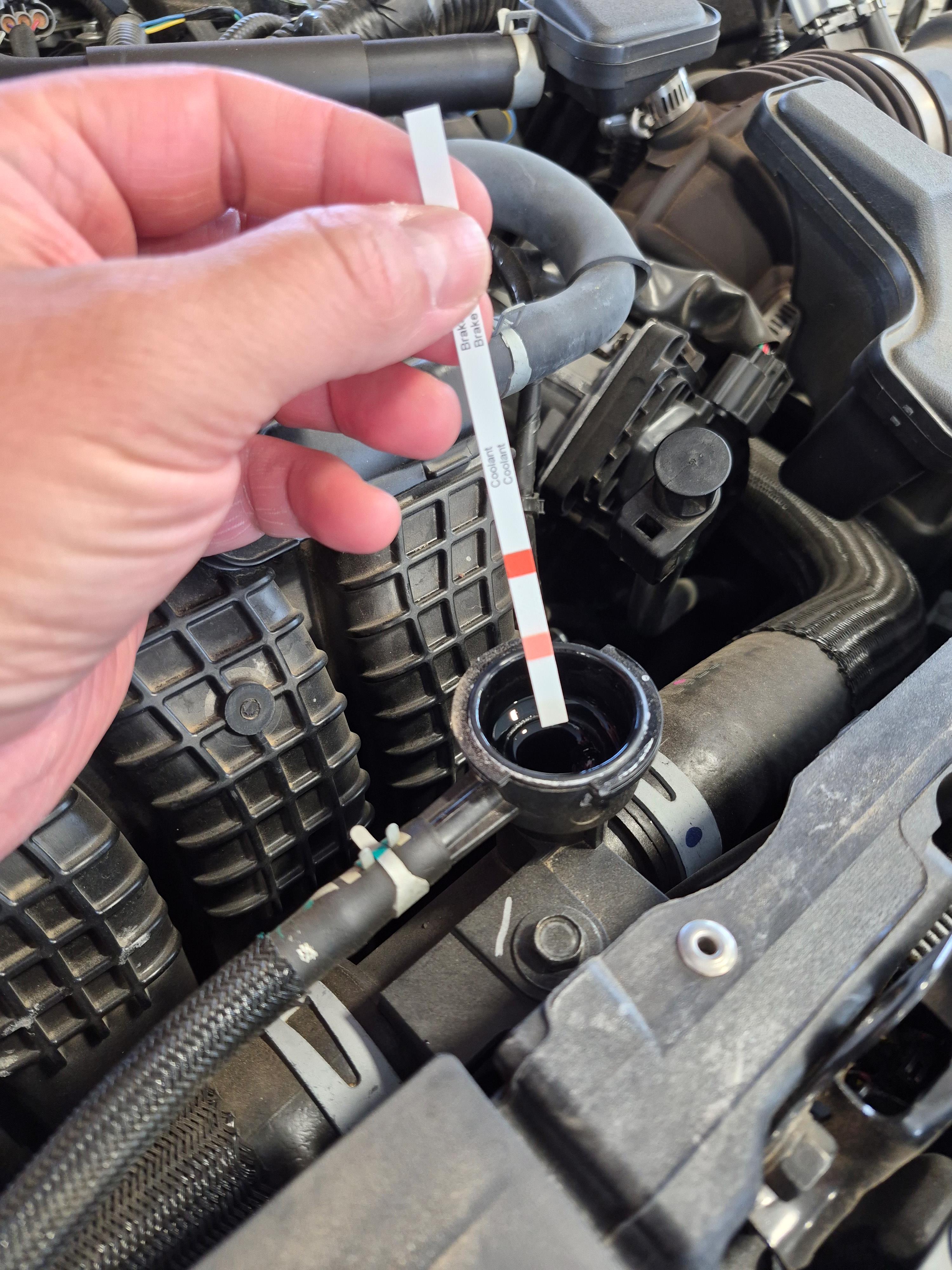
During our comprehensive Digital Vehicle Inspection (DVI), Tyler, Joe, or Alex will test your coolant's pH balance and freeze-protection levels. We take clear photos and videos of your fluid condition, radiator hoses, and water pump, texting the full report straight to your smartphone. You see the physical proof of your vehicle's health before you ever spend a dime.
The "Nice Difference" Experience:
- Zero Disruption: Drop your car off with us and take our Local Courtesy Shuttle back home or to the office so your schedule stays on track.
- Nationwide Peace of Mind: We back all qualifying maintenance and repairs with our industry-leading 3-year/36,000-mile nationwide warranty (whichever comes last).
Not sure when your coolant was last serviced? Don't wait for the temperature light to flash on I-25. Call Josh, Lindsy, and the team today at 720-605-0932 to book a transparent cooling system inspection!
[1].jpg "Four Common Services Offered at Auto Repair Centers")
[2].jpg "Make Sure You're Getting Quality Auto Parts")
sunwash-tech-with-customer.png "What is a Car Inspection?")