Why Car Batteries Fail in Summer — What Longmont Drivers Should Know
Most Colorado drivers think of a dead battery strictly as a winter problem. You walk out to your driveway on a freezing January morning, turn the key, and hear that dreaded, sluggish click.
Here is the secret our master technicians see in the shop every day: the chemical damage that causes your car to die in January actually starts months earlier—during the brutal summer heat.
Hot under-hood temperatures accelerate the internal chemical breakdown of your battery. By the time cold weather arrives and demands maximum cranking power to start your engine, a battery weakened during the summer heat simply surrenders. Late summer and early fall are the absolute best times to test your battery’s health—long before you're stuck in a parking lot with a car that won't start.
At Christian Brothers Automotive Longmont, local owners Josh and Lindsy Jeanneret believe in giving you the "Raw Proof" of your vehicle's health before you ever spend a dime. Here is how our ASE-certified techs—Tyler, Joe, Alex, and the team—break down the science of battery failure on the Front Range.
1. Summer Heat Is Brutal on Battery Fluid
Your battery relies on an internal chemical reaction between lead plates and a liquid electrolyte solution to store and deliver electrical energy. Extreme heat speeds up this chemical reaction.
When you're idling in bumper-to-bumper traffic on Ken Pratt Blvd on a 90-degree afternoon, the temperature under your hood can easily surge past 140 degrees. This intense thermal stress leads to:
- Accelerated Internal Degradation: Internal lead grids expand and break down faster.
- Electrolyte Evaporation: Fluid levels drop, exposing lead plates and causing permanent capacity loss.
- Terminal Corrosion: White or greenish acid crust builds up around the terminals, choking off electrical flow.
2. Why the Final Breakdown Happens in Winter
If summer heat causes the damage, why do tow trucks haul so many cars away in December? Because cold weather acts as the ultimate stress test.
Freezing temperatures thicken your engine oil, requiring your starter motor to draw significantly more amps to crank the engine. At the exact same time, the cold slows down the battery's remaining chemical activity. A fresh battery handles this extra demand easily; a battery already crippled by summer heat fails completely. Summer creates the internal wear, and winter exposes the weakness.
3. Warning Signs Your Battery Is Fading
Batteries don't always give a polite warning before they die, but your vehicle often leaves subtle clues:
- A slow, heavy "rrmm-rrmm" engine crank when turning the key.
- Headlights or interior dashboard lights dimming while idling at a red light on Main St or Hover St.
- Flashing battery or charging-system warning lights on the dashboard.
- Visible corrosion or white powder built up on the metal battery posts.
The Catch: Modern AGM and lead-acid batteries can start your engine normally right up until the internal cell short-circuits. Physical testing is infinitely more reliable than guessing based on symptoms alone.
4. Short Longmont Trips Strain the Alternator
Your battery’s primary job is to start the car; once running, the alternator takes over to power your electronics and recharge the battery.
If your daily driving consists of short, 3-minute runs to the store or quick drop-offs at school across town, your alternator doesn't have enough drive time to replace the energy used during startup. Combine those short trips with heavy A/C usage, blasting radio speakers, and blistering outdoor heat, and a marginal battery will drain down rapidly.
Stop Guessing: Get Digital Proof of Your Battery Health
At our shop at 110 East Ken Pratt Blvd, we don't recommend replacing a battery simply because it's a few years old. We test the battery for it’s performance to prove whether you need a new battery, or just a terminal cleaning.
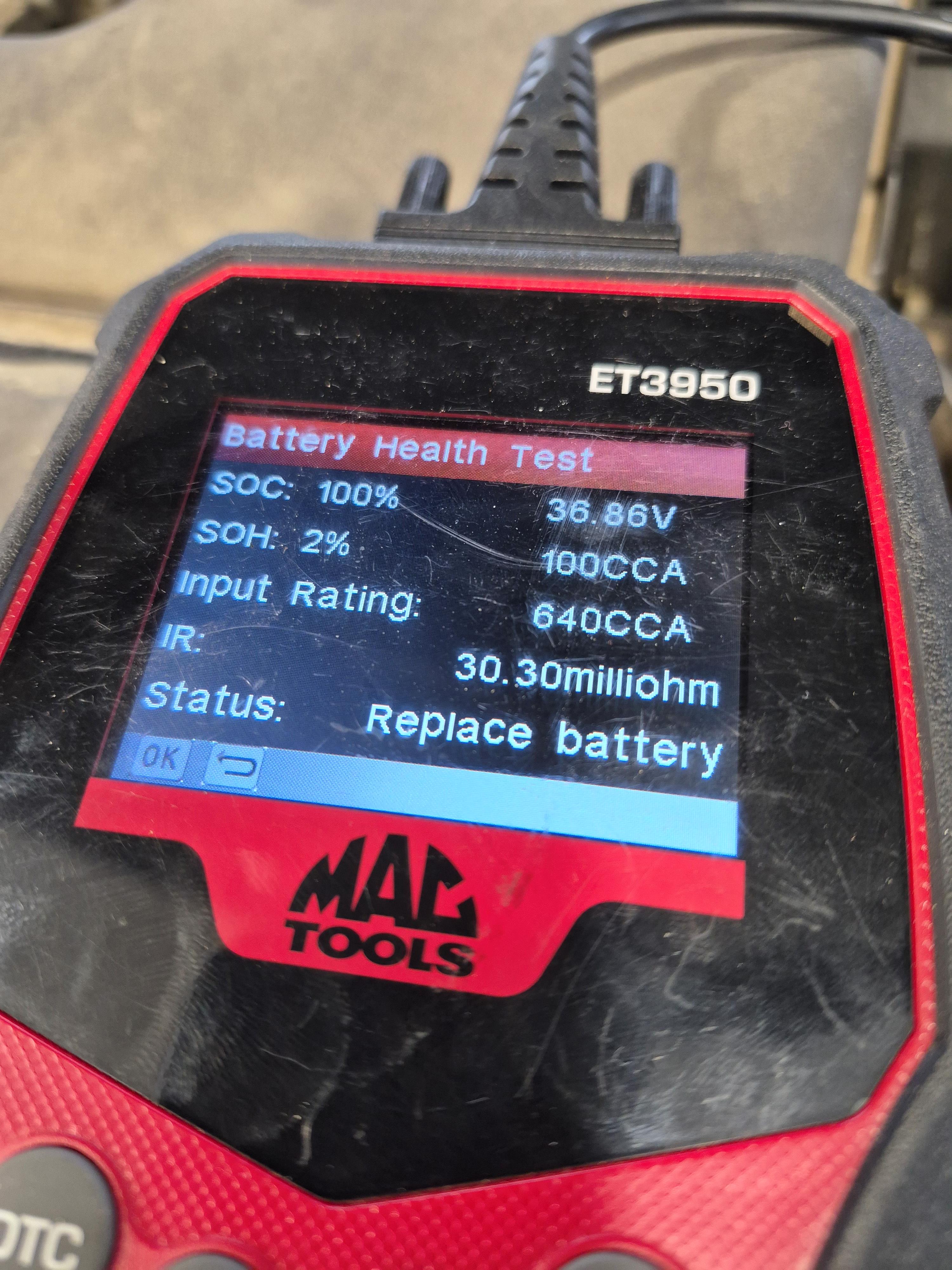
During our Digital Vehicle Inspection (DVI), our technicians hook up specialized diagnostic equipment to measure your battery's actual Cold Cranking Amps (CCA) and voltage reserves. We attach real digital photos of the test results directly to an interactive report texted straight to your phone.
The "Nice Difference" Experience for Your Family:
- Transparent Prioritization: We show you if your battery is Healthy, Weakening (plan for replacement soon), or Failing (needs immediate attention) so you stay in total control of your budget.
- Zero Schedule Disruption: Drop your car off with Bryan, Josh, Mark, or Bob at the front counter and catch a ride home or to work on our Local Courtesy Shuttle.
- Nationwide Warranty Protection: If a replacement or electrical repair is needed, we back our qualifying work with an industry-leading 3-year/36,000-mile, whichever comes last, nationwide warranty. Our premium batteries are backed locally for 5 years!
Don't wait for the first freeze of the year to leave you stranded in a parking lot. Call Josh and Lindsy’s local team today at 720-605-0932 to book a quick battery test!
[1].jpg "Four Common Services Offered at Auto Repair Centers")
[2].jpg "Make Sure You're Getting Quality Auto Parts")
sunwash-tech-with-customer.png "What is a Car Inspection?")